
Research Article
Received: 2023-09-01 | Revised:2023-11-06 | Accepted: 2023-11-13 | Published: 2023-11-21
Pages: 98-105
DOI: https://doi.org/10.58985/jpam.2023.v01i02.13
Abstract
Plants have
been used as traditional medicine and pharmacopoeial drugs since ancient times.
Bryophyllum pinnatum Lam is an indigenous and exotic plant used widely
by traditional practitioners for treating various ailments which include renal
calculi, hypertension, asthma, cold, abscesses, bleeding disorders and
convulsion. This study aimed to determine the anticonvulsant activity of Bryophyllum
pinnatum Lam. methanol leaf extract in Wistar strain rats. The methanol
extract of the plant obtained by the maceration method was screened for phytochemicals
and evaluated for acute toxicity (Lorke’s method) and anticonvulsant activity
using pentylenetetrazole and strychnine-induced seizure. Three (3) extract
treatment doses of 300, 600 and 900 mg/kg were compared with non-treated (-ve
control) and phenobarbitone-treated (+ve control drug) rats. The phytochemical screening of the
extract revealed the presence of flavonoids, alkaloids, terpenoids, cardiac
glycosides, cardenolides, carbohydrates, saponins and tannins. The oral and
intraperitoneal acute toxicities (LD50) were ≥5000 mg/kg and
3807mg/kg respectively. The anti-convulsant study showed that the extract had a
dose-dependent anticonvulsant effect by significantly conferring protection of
40%, 60%, and 80% against PTZ-induced convulsion when treated with extract
doses of 300 mg/kg, 600 mg/kg and 900 mg/kg respectively. The extract also conferred protection of 20%, 60% 100% of the rats
against death induced by the strychnine. Although diazepam (5mg/kg) a standard conventional
anticonvulsant drug had 100% conferment against PTZ-induced convulsion in the
rats, there was no significant difference between the effect of phenobarbitone
(20mg/kg) and rats treated with 900mg/kg of the extract which also conferred
100% protection against strychnine-induced convulsion. Thus, the leaf of Byophyllum
pinnatum could be said to have anticonvulsant activity.
Keywords
Byophyllum pinnatum, seizure, phytochemicals,
pentylenetetrazole, acute toxicity, medicinal plant.
1. Introduction
Human has
recorded huge success in the use of plants for the treatment and management of
diseases since the ancient times. Most of the world's populations depend on
plants because of their medicinal value. Medicinal plants have been used for
the treatment of illness since ancient period [1]. The
word "epilepsy" is derived from the ancient Greek word Epilepsia which means "to seize"
[2]. An epileptic seizure is a transient
paroxysm of uncontrolled discharges of neurons causing an event that is
discernible by the person experiencing the seizure or the observer. The
tendency to have recurrent attacks is known as epilepsy. A patient with epilepsy
will show recurrent epileptic seizures that occur unexpectedly and stop spontaneously
[3]. Anyone can develop epilepsy, epilepsy
affects both males and females of all races, ethnic backgrounds and ages [4]. Epilepsy is a disease that affects about 50
million people across the globe and 85% of this population resides in
developing countries, it is the second most common neurological disorder. The
World Health Organization [5] has estimated
that 5 million people are diagnosed with epilepsy each year. In Nigeria, the
estimated prevalence of epilepsy is 8 per 1000 people indicating a substantial
burden of the disease in the country [6].
Epilepsy has no
identifiable cause in about half the people with the condition. On the other hand,
the condition may be traced to various factors which include: genetic
influence, head trauma, brain conditions, infectious disease, prenatal syndrome
and developmental disorders [7].
Bryophyllum pinnatum Lam. plant
belongs to the Family Crassulaceae, commonly used in traditional medicine. The
plant is derived from the Greek word ‘Bryo’ which means to ‘sprout' and phyllon
means ‘leaf’. The plant, Bryophyllum
pinnatum (Crassulaceae) (Fig. 1) is commonly known as a life miracle,
resurrection, or ‘never die’ plant. In Nigeria, it is locally known as ‘Ododuk
mmong’ (in Efik), ‘Abamoda’ (in Yoruba), ‘Ugwoba’ (in Igbo) and ‘Karan’ (in
Hausa) [8]. It is used in folk medicine in
tropical Africa, tropical America, India, China and Australia [9]. It is an indigenous and exotic plant used
widely by traditional practitioners for treating various ailments which include
renal calculi, hypertension, asthma, cold, abscesses, bleeding disorders and
convulsion [10]. Phytochemical
investigations reveal the plant contains alkaloids, cardiac glycosides, and flavonoids
[11]. The
leaves of Bryophyllum pinnatum plant
have been reported to possess antileishmanial, anticancer, immunosuppressive,
antiulcer, anti-inflammatory and anthelmintic, antihistaminic, antifungal,
analgesic antihypertensive, antidiabetic, anticonvulsant and antimutagenic
activities. Central Nervous System (CNS) depressant antibacterial and
insecticidal actions [12].
Conventional antiepileptic agents which include phenytoin, carbamazepine sodium valproate etc. have been reported to possess several serious side effects, notably neurotoxicity. In spite of the introduction of these antiepileptic drugs (AED) and their general acceptability in the healthcare sector, there is no known cure for epilepsy [13]. As the majority of antiepileptic drugs are consumed lifelong, concomitant administration of other drugs is predisposed to risks of drug interactions. Thus, based on the recommendation of WHO it is necessary to search for antiepileptic agents within the plant kingdom that is highly efficacious as well as safe in terms of drug-related toxicity. Thus, the aim of the study is to determine the anticonvulsant activity of methanol leaf extract of Bryophyllum pinnatum Lam. in albino rats. This could further generate more scientific data for the continuous research and development of Bryophyllum pinnatum in order to have a less toxic and more effective anti-epileptic agent.

Figure 1: Bryophyllum
pinnatum in its
natural habitat
2. Materials
and methods
2.1 Sample collection,
identification and preparation
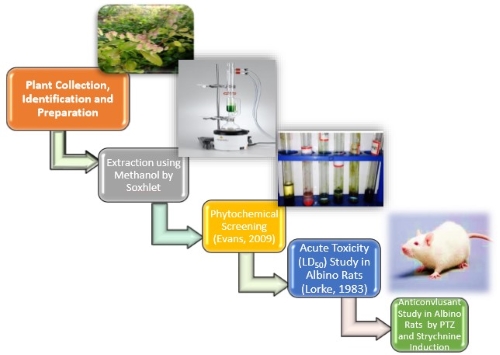
The fresh leaf of Bryophyllum pinnatum was collected in December, 2021, at the Federal College of Forestry, Bauchi Road Jos, Nigeria. It was identified and authenticated by a Plant Taxonomist, Prof. S.S. Sanusi of the Department of Biological Science, Faculty of Sciences, University of Maiduguri, Maiduguri, Borno State. A voucher specimen number (UMM/FPH/COB/002) was deposited at the herbarium of the Department of Pharmacognosy, Faculty of Pharmacy, University of Maiduguri, Maiduguri, Borno State. The leaf extract was air-dried at room temperature and ground into powder using a wooden mortar and pestle. The powdered plant material was stored in an air tight container prior to extraction.
2.2 Extraction and phytochemical
analysis
Two hundred and thirty grams (230g) of the ground leaf was soxhlet extracted using 95% methanol for 6h. The solution obtained was then filtered to remove debris, and was concentrated using rotary evaporator at 40 °C. The dried extract was weighed and transferred into an air-tight container until required for analysis. A small quantity of the extract was subjected to qualitative phytochemical screening to test for the presence of alkaloids, carbohydrates, flavonoids, saponins, tannins, glycosides, (cardiac, steroidal), terpenes/terpenoids using conventional protocols [14-16].
2.3 Experimental animals
and acclimatization
Adult
Wistar strain rats of both sexes (42) weighing between 120-200 g were used for
both the acute toxicity studies (LD50 determination) and the anticonvulsant
effect. These rats were purchased from the Animal House section of Faculty of
Veterinary Medicine, University of Maiduguri, Borno State. The animals were
housed in standard wire meshed plastic cages in the animal section of the Physiology,
Pharmacology and Biochemistry Laboratory of the Faculty of Veterinary Medicine.
The rats were kept in clean plastic cages at normal conditions of temperature, light and humidity for of 10 days to acclimatize. They were allowed free access to clean drinking water and standard livestock feed (vital feeds) and were handled according to the International Guiding Principles for Biomedical Research Involving Animals [17]. Ethical clearance with Reference approval code: HRE-UM-21-432 was given by the Health Research Ethics Committee of the University of Maiduguri.
2.4 Acute toxicity (LD50)
studies
The acute toxicity of the methanol leaf extract of Bryophyllum pinnatum was determined using standard conventional procedure described by Lorke [18]. In this study, both oral and intraperitoneal routes of administration were considered. The test comprised 2 phases. Briefly, in Phase I, nine healthy albino rats of both sexes were selected at random, they were divided into three groups (labelled A, B, and C) of three rats each. The animals were then labelled with picric acid on their tails as a mark of identification. They were then treated with the methanolic leaf extract of Bryophyllum pinnatum at doses of 10 mg/kg, 100 mg/kg, and 1000 mg/kg orally. The animals were then observed for 24 hours for signs of toxicity and mortality which there was no mortality observed. In The second phase (Phase II), three dose levels were used based on the result of phase I after 24 hours for both oral and intraperitoneal routes. Three rats were given the dose of the leave extract of 1600 mg/kg, 2900 mg/kg and 5000 mg/kg respectively. These rats were then observed for 24 hours for signs of toxicity and mortality after which the LD50 (acute toxicity) was calculated as the geometric mean of the lowest dose that caused death and the highest dose in which the animal survived 0/1 and 1/1.

Where a=least dose that killed the animal 0/1 and b= highest dose that did not kill the animal 0/1.
2.5 Effect of methanol
leaf extract of Bryophyllum pinnatum
on pentylenetetrazole-induced convulsion in rats
The experimental method of Anticonvulsant study as described by Swinyard et al. [19]; Medugu et al. [20] and Yakubu et al. [21] was adopted in this study. Twenty-five (25) albino rats of both sexes weighing between 105-200 g were used. The rats were housed in clean cages and were given food and water ad libitum. They were then divided into five groups of five rats each, in which they were labelled as groups A, B, C, D and E. Group A was given 100 mg/kg of pentylenetetrazole (PTZ) i.p and served as the negative control and were not pre-treated. Group B, C and D were pre-treated intraperitoneally with 300 mg/kg, 600 mg/kg and 900 mg/kg of the extract respectively, 30 minutes before treatment with convulsant (100 mg/kg of PTZ) and Group E was given 5 mg/kg orally of diazepam which serves as the positive control as standard anticonvulsant drug. During the experiment the onset of convulsion, number of convulsions per minute and the duration of convulsions were recorded for 30 minutes. Also, the number of animals that survived within the period of observation was expressed as percentage (%) protection. The controls used for this research were; pentylenetetrazole (PTZ) (negative control) and diazepam (Positive control).
2.6 Strychnine-induced convulsion in rats
The method described by Medugu et al. [20] was adopted in this study. In brief, strychnine convulsion was induced by the subcutaneous injection of 1mg/kg of strychnine nitrate in the rats. Thirty (30min) prior to administration, 3 groups (groups 2, 3 and 4) of 5 animals each were intraperitoneally pre-treated with methanol extract of Bryophyllum pinnatum with doses of 300mg/kg, 600mg/kg and 900mg/kg. The fifth group of five (5) rats was treated with phenobarbitone sodium (20mg/kg i.p) which served as the positive control while the sixth group of five (5) rats received normal saline 10ml/kg as the negative control. The rats were observed for tonic extensor jerks of the hind limbs followed by death in 30 minutes. The abolition of tonic extensor jerks of the hind limb was considered an indicator that the extract could prevent strychnine-induced convulsion.
2.7 Statistical analysis
The generated data from the anticonvulsant study were expressed as mean ± standard error of the mean and analyzed by one-way analysis of variance (ANOVA) by Tukey-Kramer’s multiple comparison Post-Hoc Test using Statistical Graphpad prism Version 9.0 for Windows. A probability value of p<0.05 was considered significant.
3. Results
3.1 Extraction profile of Bryophyllum pinnatum leaf
The weight, colour, texture and percentage yield of the methanolic leaf extract of Bryophyllum pinnatum from soxhlet extraction are presented in Table 1. The weight of the extract was 20.3 g, colour of the extract was dark green, it is texture was gummy-coarse and the percentage yield was 8.82% w/w.
Table 1. Extraction profile of extract of Bryophyllum pinnatum leaf
|
S/N |
Parameter |
Methanol
Extract |
|
1 |
Weight |
20.30 g |
|
2 |
Colour |
Dark-green |
|
3 |
Texture |
Coarse |
|
4 |
Yield (%) (w/w) |
8.82 % |
|
Weight of the ground leaves =230g Weight of the extract =20.3g % yield =20.3g
/230 x100 =8.82% |
||
3.2 Phytochemical screening of
methanol leaf extract of Bryophyllum
pinnatum
The phytochemical screening of the methanol leaf extract revealed the presence of flavonoids, alkaloids, terpenoids, cardiac glycosides, cardenolides, carbohydrates, saponins and tannins. The result is presented in Table 2.
Table 2. Phytochemical screening of methanol leaf extract of Bryophyllum pinnatum
|
S/N |
Test |
Results |
|
|
|
1 |
Test for Carbohydrates |
|
||
|
|
General
test-Molisch’s test Test
for monosaccharide Test
for free reducing sugar Test
for combined reducing sugar Test
for ketoses |
+ _ + + + |
||
|
2 |
Test for Flavonoids |
|
||
|
|
Shinoda’s
test Ferric
chloride test Lead
acetate test Sodium
hydroxide test |
+ + _ + |
||
|
3 |
Test for Terpenoids |
+ |
||
|
4 |
Test for Cardenolides Keller-Killiani’s
test |
+ |
||
|
5 |
Test for Saponins Frothing
test |
+ |
||
|
6 |
Test for Tannins Ferric
chloride test Lead
acetate test |
+ _ |
||
|
7 |
Test for Cardiac Glycosides Salkowski’s
test Lieberman-Burchard
test |
+ + |
||
|
8 |
Test for Anthraquinones Test
for combined anthraquinones |
_ |
||
|
9 |
Test for Alkaloids Dragendorff’s
reagent Mayer’s
reagent |
+ _ |
||
|
+ =Present; - =absence |
|
|||
3.3 Acute toxicity
of methanol leaf extract of Bryophyllum
pinnatum
The result of acute toxicity (LD50) study is shown in Table 3. No death was recorded in all methanol extract doses administered to the rats orally, via both Phases, while death was recorded when 5000mg/kg of the extract was administered intraperitoneally in Phase II. Thus the oral and intraperitoneal LD50 were ≥5000 mg/kg and 3807mg/kg respectively.
Table 3. Determination of oral and
intraperitoneal median lethal dose of methanol leaf extract of Bryophyllum pinnatum
|
Phase |
No.
of Rats |
Dose (mg/kg) |
Mortality
Rate |
|
|
Oral
route |
IP route |
|||
|
1 |
3 |
10 |
0/3 |
0/3 |
|
1 |
3 |
100 |
0/3 |
0/3 |
|
1 |
3 |
1000 |
0/3 |
0/3 |
|
2 |
1 |
1600 |
0/1 |
0/1 |
|
2 |
1 |
2900 |
0/1 |
0/1 |
|
2 |
1 |
5000 |
0/1 |
1/1 |
3.4 The effect
of methanol leaf extract of Bryophyllum
pinnatum on PTZ-induced convulsion in rats
The anticonvulsant study of the methanol extract is shown in Table 4. It could be observed that there is a dose-dependent anticonvulsant effect of the extract. The extract significantly conferred protection of 40%, 60%, and 80% against PTZ-Induced convulsion when treated with extract doses of 300 mg/kg, 600 mg/kg and 900 mg/kg respectively. There was also a decrease in onset of convulsion while there was a significant increase in time of death in a dose dependent manner except in group 4 (900mg/kg extract treatment).
Table 4. The Effect of methanol leaf extract of Bryophyllum pinnatum on PTZ-induced convulsion in albino rats
|
GP |
Treatment (mg/kg) |
Onset
of Convulsion (min) (Mean±SEM) |
Onset
of Death (min) (Mean±SEM) |
Quantal Death |
Protection
(%) |
|
1 |
PTZ (100mg/kg) |
7.56±0.26* |
17.70±0.45* |
5/5 |
0 |
|
2 |
300 |
12.00±0.58* |
21.00±0.58* |
3/5 |
40 |
|
3 |
600 |
16.00±0.58* |
24.50±0.50* |
2/5 |
60 |
|
4 |
900 |
19.00±2.00* |
5.60±3.60* |
1/5 |
80 |
|
5 |
Diazepam (5mg/kg) |
0.00±0.00 |
0.00±0.00 |
0/5 |
100 |
|
PTZ=pentylenetetrazole; n=number of
the group which is 5; *p<0.05 which means they are statistically
significant when compared to group 5(positive control); SEM= Standard error
of the mean; GP= Groups. |
|||||
3.5 The
effect of methanol extract of Bryophyllum
pinnatum on
strychnine-induced convulsion in albino rats
The methanol extract of Bryophyllum pinnatum at doses of 300, 600 and 900mg/kg conferred protection of 20%, 60% and 100% respectively against strychnine-induced death. The extract acted significantly (p<0.05) delaying the onset of convulsion and time of death in a dose-dependent manner. The result of the study is shown in Table 5.
Table
5: Effect of methanol extract of Bryophyllum pinnatum
on strychnine-induced convulsion in
rats
|
GP |
Treatment
(mg/kg) |
Onset
of Convulsion (Mean.±SEM) |
Mean
Time of Death (Meann.±SEM) |
Quantal
Death |
Protection
(%) |
|
1 |
N/Saline (10ml/kg) |
07.00±0.20 |
09.01±0.20 |
0/5 |
0 |
|
2 |
300 |
16.00±1.20* |
19.00±0.20* |
1/5 |
20 |
|
3 |
600 |
20.20±0.50* |
21.00±1.00* |
3/5 |
60 |
|
4 |
900 |
27.00±0.00* |
26.70±0.01 |
5/5 |
100 |
|
5 |
Phenobarbitone
(20mg/kg) |
29.00±0.00* |
27.00±0.02 |
5/5 |
100 |
|
n=number of the group which is 5; *P<0.05 which means they are statistically significant when compared to group 5(positive control); SEM= Standard error of the mean; GP= Groups. |
|||||
4. Discussion
The crude extract of Bryophyllum pinnatum obtained was subjected to phytochemical analysis to determine the presence of certain phytochemicals such as saponins, alkaloids, anthraquinones, tannins, flavonoids, steroids and cardiac glycosides using standard methods. The result of the screening revealed the presence of carbohydrates, flavonoids, terpenoids, cardenolides, tannins, cardiac glycosides, alkaloids, while anthraquinones, resins and steroids were absent. The above phytochemicals from other plants have been reported to have anticonvulsant properties in various animal models of epilepsy like PTZ, MES, electrical kindling, etc. The result conforms with the findings of Latif et al. [22] and Bakare et al. [23]. These phytochemicals have been reported to exert pharmacological actions which include antimicrobial, anticancer, antihypertensive, antidepressant, antidiabetic, wound healing property, antilithogenic, hapato-protective, anti-inflammatory, cytotoxicity of testis, uterine contractility, immunosuppressive effect, neuropharmacological activity, antioxidant, antitussive, antiasthmatic, insecticidal activity, fungitoxic phytotoxic and antiurolithic, anticonvulsant activities [22].
The acute toxicity (LD50) study of methanolic extract of Bryophyllum pinnatum leaf has been found to be greater than or equal to 5000 mg/kg for oral administration as no deaths are recorded in both phase I and phase II within 24hrs even at the lowest dose; and 3807mg/kg for intraperitoneal administration. According to Clarke and Clarke [24] and Yakubu et al. [25] any substance whose LD50 in rats which ranges between 50 and 500 mg/kg is regarded as toxic, between 500 mg/kg but less than 1,000 mg/kg is moderately toxic and greater than 1,000 mg/kg is non-toxic. Therefore, it implies that, the higher the LD50 value, the safer the extract and vice versa and the wide range of LD50 denoted the safety effect of the extract. Furthermore, the doses of the extract used in this study were lower than 30% of the LD50. These doses are relatively safe for ethnopharmacological research [23].
Prevention of seizures induced by PTZ and strychnine in laboratory animals is the most commonly used preliminary screening test for characterizing potential anticonvulsant drugs [2]. The anticonvulsant activity of Bryophyllum pinnatum at various dose levels of 300 mg/kg, 600 mg/kg and 900 mg/kg intraperitoneally (i.p) was studied by the PTZ-induced seizure model. It is documented that PTZ-induced convulsions are produced due to the diminution of brain GABA (Gama amino butyric acid) level [2] and it also reduces the T-type of Ca++ currents [26]. Since the methanol leaf extract of Bryophyllum pinnatum delayed the occurrence of PTZ- and strychnine-induced convulsions, it may likely be interfering with GABA-ergic mechanism to exert it is anticonvulsant activity. The plant leaf extract at a dose of 300 mg/kg, 600 mg/kg and 900 mg/kg are significant and there is also a decrease or delay in the duration of onset of convulsion which means the extract has anticonvulsant effect. However, the standard drug (diazepam 5 mg/kg i.p) provides 100% protection from convulsion, whereas 80% protection at 900 mg/kg, 60% protection at 600 mg/kg and 40% protection at 300 mg/kg as the latency and dose of the extract was increased. The probable anticonvulsant mechanism may be due to potentiating of GABA-ergic inhibition or blocking the seizure spread by inhibiting voltage gated Na+ channels and/or glutaminergic excitation through NMDA (N-methyl-D-aspartate receptor) as in [26].
Strychnine is well-known for its ability to antagonize the inhibitory spinal reflexes of glycine [27]. The methanol crude extract at the doses of 300mg/kg, 600mg/kg and 900mg/kg conferred protection of 20%, 60% 100% of the rats against death induced by the strychnine. The convulsion caused by strychnine is usually due to the interference with postsynaptic inhibition mediated by glycine, which is an important inhibitory transmitter of the motor neurons and interneurons in the spinal cord, making it act as a selective and competitive antagonist at all glycine receptors [28]. The potential of the methanol extract of Bryophyllum pinnatum to inhibit strychnine-induced convulsion amasses to its anticonvulsant effect mediated through glycine receptors [29].
The anticonvulsant effect of the leaf extract using pentylenetetazole-induced rat model agrees with the finding of Dutta et al. [26], who also reported the antivonvulsant effect of the ethanol leaf extract on experimental mice. Another study by Bakare et al. [23] reported that the 250, 500 and 1000 mg/kg of the methanol extract had 0.00, 16.67 and 50% protection against PTZ-induced convulsion in mice.
5. Conclusions
The methanolic extract of Byophyllum pinnatum Linn. exerted anticonvulsant activity against seizure induced by PTZ and strychnine by delaying the onset of convulsion in a dose dependent manner especially in strychnine-induced rats by interfering with GABA-ergic mechanism. It is recommended that, the identification of the phytochemicals responsible for the plants activity should be prioritised. The anticonvulsant activity could be due to the individualistic or synergistic effect of the phytochemicals present in the extract.
Ethical Consent
Ethical review and approval were waived because standard ethics described by the International Council of Laboratory Animal Science (ICLAS) and Council for International Organizations of Medical Sciences (CIOMS) and the National Institute of Health Guidelines for the Care and use of Laboratory Animals (NIH Publications No.80 -23) as revised in 1996 was adopted and the research work was supervised by a veterinary pharmacologist, who is also one of the authors of this research work.
Authors’ contributions
Conceptualization & Experimental Design, O.A.S; Formal Analysis and Investigation, F.H.U. & B.W.; Writing & Data analysis, F.H.U. & J.Y.; Original Draft Presentation, J.Y.; Writing-Review & Editing, O.A.S.; All authors read and approved the final manuscript.
Acknowledgements
The authors wish to thank Mr. Fine Akawu of the Department of Pure and Applied Chemistry Postgraduate Laboratory for his assistance during this research.
Funding
No financial support was received whatsoever during this research
Availability of data and materials
All relevant data are within the paper and its supporting information files. Additional data will be made available on request according to the journal policy.
Conflicts of interest
The authors declare no conflict of interest
References
1.
Vijayalakshmi, A.; Kumar, P.R.; Priyadarsini,
S.S.; Meenaxshi, C. In vitro
antioxidant and anticancer activity of flavonoid fraction from the aerial parts
of Cissus quadrangularis Linn.
against human breast carcinoma cell lines. J. Chem. 2013, 9.
2.
Padma, L.L. Screening for
anticonvulsant and analgesics activity. Asian
J. Res. Pharmacol. Pharmacother. 2014, 3(2), 3-6.
3.
Sander, J.W.; Dhillon, S. Epilepsy in
Clinical Pharmacy and therapeutics, 5th edition, 2012, 489-506.
4.
Schachter, S.C. Evaluation and
management of the first Seizure in adults. Up to date. http://www.update.com/contents/search. 2021.
5.
WHO.
World Health Organization. Epilepsy. https://who.int/news-room/fact-sheets/detail/epilepsy#. 2020.
6.
Owolabi, L.F.; Adamu, B.; Jibo, A.M.; Owolabi,
D.S.; Isa, A.I.; Alhaji, I.D.; Enwere, O.O. Prevalence of active epilepsy, lifetime
epilepsy prevalence, and burden of epilepsy in sub-Saharan Africa from
meta-analysis of door-to-door population-based surveys. Epilepsy Behav. 2020,
103(Pt A), 106846.
7.
Daroff, R.B.; Jankorie, J.; Mazziotta, J.;
Pomeroy, L.S.; Newman, J.N. Epilepsies in Bradley's Neurology in Clinical Practice,
8th edition. 2021.
8.
Bassey, I.E.; Udo, E.F.; Oluwaseyiadesite,
S. Effect of crude aqueous leaves extract of Bryophyllum pinnatum on antioxidant status, blood glucose, lipid
profile, liver and renal function indices in albino rats. Global J. Pure
Applied Sci. 2021, 27, 231-241.
9.
Seema, V.P. Kalanchoe pinnata: Phytochemical and Pharmacological Profile. Int.
J. Pharmaceut. Sci. Res. 2012, 3(4), 993 -1000.
10.
Muhammad, A.; Imran, K.; Ruqaiyah, K.;
Rajbala, S.; Mohit, C.; Tanvi, B.; Firoz, A. 2012. Bryophyllum pinnatum: A
review. Int. J. Res. Biol. Sci. 2012, 2 (4), 143-149.
11.
Nagaratna, A.; Prakash, L.H. A
comprehensive review on parnabeeja [Bryophyllum
pinnatum (Lam.) Oken]. J. Med. Plants Stud. 2015, 3(5), 166 – 171.
12.
Thorat, S.S. A review on Bryophylum
pinnatum. Inter. Res. J. Pharm,
2017, 8(12), 1-3.
13.
Loscher, W. Current status and future
directions in the pharmacotherapy of epilepsy.
Trends Pharmacol. Sci, 2002, 23, 113–118.
14. Sofowora, A.E. Medicinal
Plants and Traditional Medicine in Africa. 3rd Edition. Spectrum
Books Limited, Ibadan Nigeria, 2008, pp.97-112.
15.
Evans, W.E. Trease and Evans Pharmacognosy. 16th Edition.
Saunders Publishers, London. 2009, pp.42–229.
16.
Yakubu, J.; Usman, Y.B.; Balami, M.V.; Jonathan,
N.; Semiu, Y.; Teri, D.M. Phytochemical and elemental analysis of some organic
solvent leaf extracts of Piliostigma
thonningii (Schumach) Milne-Redhead. Ewemen J. Folklore Med. 2016, 2(2),
49-57.
17.
CIOMS. and ICLAS. Council
for International Organization of Medical Science and International Council for
Laboratory Animal Science. http: //idas.
Org/wp-content/uploads/2013/03/ciom-iclas-principles-find, pdf. Retrieved:
22/4/2015. (2012).
18.
Lorke, D. A new approach to
practical acute toxicity testing. Arch Toxicol, 1983, 54, 275-287.
19.
Swinyard, E.A.; Woodhead, J.H. White, H.S.
Franklin, M.R. General principles: Experimental selection, quantification and
evaluation of anticonvulsant, 3rded. In: Levy, R.H., Mattson, B., Melrum, J.K.,
Dreifuss, F.E. (eds), Springer-Verlag Berlin Heidelberg: New York, U.S.A, 989,
pp 566-874.
20. Medugu, A.N.; Yakubu, J.; Balami, V.M.; Medugu, N.M.; Tata, F.Y.;
Marte, H.I.; Yerima, S.T. Anti-epileptic studies of Chamaecrista mimosoides ethanol extract. Tropical J. Nat. Prod. Res. 2020, 4(5), 203 – 209.
21.
Yakubu, J.; Sodipo, O.A.; Abdulrahman, F.I.;
Balami, V.M. Toxicity study and anticonvulsant effect of ethanol leaf extract
of Piliostigma thonningii Milne-Redhead
(Fabaceae). Nig. J. Pharmaceut. Res. 2021, 17(1), 63-70.
22.
Latif, A.; Ashiq, K.; Qayyum, M.; Ashiq,
S.; Ali, E.; Anwer, A. Phytochemical and pharmacological profile of the
medicinal herb of Bryophyllum pinnatum. J. Animal Plant Sci.
2019, 29(6), 1528-1534.
23.
Bakare, L.O.; Abdullahi, S.M.; Sadam, M.;
Salaudeen, A.A.; Ilyas, M.A. Evaluation of anticonvulsant properties of
methanol aerial extract of Bryophyllum
pinnatum (Lam.) Oken (Crassulaceae) in mice and chicks. Nig. J. Pharmaceut.
Res. 2020, 1, 45-49.
24.
Clarke, E.C.G.; Clarke, M.I. Veterinary Toxicology. 2nd
edition. Bellaire Tindall, New York, 1977, p.10.
25.
Yakubu, J.; Sodipo, O.A.; Abubakar,
S.U. Phytochemical profiling, toxicity study and abortifacient activity of seed
and whole plant of Momordica charantia Linn.
(Cucurbitaceae), Chem. Rev. Lett. 2022, 5, 200-206.
26.
Dutta, A.; Handique, C.; Lahkar, M. Evaluation
of anticonvulsant potential of Bryophyllum
pinnatum in experimental animals. Asian J. Biomed. Pharmaceut. Sci. 2015, 5(41),
18-22.
27.
Sayin, U., Cengiz, S.; Altug, T. Vigabatin as an anticonvulsant
against pentyletetrazole seizures. Pharmacol Res. 1993, 28, 325-31.
28. Rajendra, S.; Lynch, J.W.; Schofield, P.R. The glycine receptor. Pharmacol. Ther. 1997, 73, 121-146.
29. Ogbonnia, S.; VanStaden, J.; Jager, A.K.; Coker, H.A. Anticonvulsant effect of Glyphaea brevis (Spreng) Moraches leaf extract in mice and preliminary phytochemical tests. Nig. Q. J. Hosp. Med, 2003, 13(3-4), 62-64.
This work is licensed under the
Creative Commons Attribution
4.0
License (CC BY-NC 4.0).
Abstract
Plants have
been used as traditional medicine and pharmacopoeial drugs since ancient times.
Bryophyllum pinnatum Lam is an indigenous and exotic plant used widely
by traditional practitioners for treating various ailments which include renal
calculi, hypertension, asthma, cold, abscesses, bleeding disorders and
convulsion. This study aimed to determine the anticonvulsant activity of Bryophyllum
pinnatum Lam. methanol leaf extract in Wistar strain rats. The methanol
extract of the plant obtained by the maceration method was screened for phytochemicals
and evaluated for acute toxicity (Lorke’s method) and anticonvulsant activity
using pentylenetetrazole and strychnine-induced seizure. Three (3) extract
treatment doses of 300, 600 and 900 mg/kg were compared with non-treated (-ve
control) and phenobarbitone-treated (+ve control drug) rats. The phytochemical screening of the
extract revealed the presence of flavonoids, alkaloids, terpenoids, cardiac
glycosides, cardenolides, carbohydrates, saponins and tannins. The oral and
intraperitoneal acute toxicities (LD50) were ≥5000 mg/kg and
3807mg/kg respectively. The anti-convulsant study showed that the extract had a
dose-dependent anticonvulsant effect by significantly conferring protection of
40%, 60%, and 80% against PTZ-induced convulsion when treated with extract
doses of 300 mg/kg, 600 mg/kg and 900 mg/kg respectively. The extract also conferred protection of 20%, 60% 100% of the rats
against death induced by the strychnine. Although diazepam (5mg/kg) a standard conventional
anticonvulsant drug had 100% conferment against PTZ-induced convulsion in the
rats, there was no significant difference between the effect of phenobarbitone
(20mg/kg) and rats treated with 900mg/kg of the extract which also conferred
100% protection against strychnine-induced convulsion. Thus, the leaf of Byophyllum
pinnatum could be said to have anticonvulsant activity.
Abstract Keywords
Byophyllum pinnatum, seizure, phytochemicals,
pentylenetetrazole, acute toxicity, medicinal plant.
This work is licensed under the
Creative Commons Attribution
4.0
License (CC BY-NC 4.0).
Editor-in-Chief


This work is licensed under the
Creative Commons Attribution 4.0
License.(CC BY-NC 4.0).