
Review Article
Received: 2023-06-13 | Revised:2023-07-20 | Accepted: 2023-08-28 | Published: 2023-08-14
Pages: 57-64
DOI: https://doi.org/10.58985/jpam.2023.v01i02.07
Abstract
Medicinal plants are plants that have been cultivated and utilised for their nutritional and therapeutic benefits. They have been created and sold in the form of tablets, capsules, powders, teas, fresh and dried components. Although most medicinal plants are thought to be natural and safe, this is not always the case. Moringa Oleifera and Telfeira Occidentalis are two medicinal plants with profound health benefits which have been used over the years due to their rich antioxidant constituents and other useful bioactive plant compounds following investigations with respect to organ toxicity have been found to have mainly positive and harmless impacts on body organs. The use of bioactive compounds to reform medicines in the future is exciting, and prospects for curing multiple diseases are encouraging; however, this should be extended to investigating their safe consumption. This review sheds light on the toxicological effects of Moringa Oleifera and Telfeira Occidentalis on vital organs and systems of the body. The present review addresses the break in literature by presenting the need to investigate the interaction of medicinal plants extracts in the body and their mode of action. To our knowledge, this baseline review aids researchers and herb users in understanding many aspects of herbal medicinal use.
Keywords
Medicinal plants, Moringa oleifera, Telfeira occidentalis, organ toxicity, antioxidant
1. Introduction
The herb is a plant or plant component that is utilized for its flavor, aroma, or medicinal qualities. Herbal medication is a type of food supplement. Herbs can be purchased as pills, teas, extracts, tablets, capsules, powders, fresh parts, or dried components [1].
Since most herbal remedies do not undergo the same testing as drugs, many people mistakenly believe that items with the label "natural" are always safe and beneficial for them. However, some herbs, including ephedra and comfrey, can be very harmful. Certain herbs may interact with over-the-counter or prescription medications. Herbal products are simply medicinal products made from botanicals that are used to maintain health. Herbal goods are different from other over-the-counter treatments made from plants in that they only contain elements of plants that haven't been purified or processed chemically [2].
The use of herbal medicines and supplements has been practiced for thousands of years, but government organizations and regulatory bodies do not closely monitor them. The FDA views herbal supplements as foods rather than medications. As a result, they are exempted from the same testing, manufacturing, and labeling rules and laws that apply to pharmaceuticals. Due to the lack of clinical trials for herbal medications, the labels of herbal supplements cannot include the treatment of specific medical disorders [3].
Many researchers have published reviews on medicinal plants and most of their attention has been on the efficacy and pharmacotherapeutics of medicinal plants [4-9]. The use of bioactive compounds to reform medicines in the future is exciting, and prospects for curing multiple diseases are encouraging; however, this should be extended to investigating for their safe consumption. This review sheds light on the toxicological effects of two commonly used herbs on vital organs and systems of the body. The present review addresses the break in literature by presenting the need to investigate the interaction of medicinal plant extracts in the body and their mode of action. To our knowledge, this baseline review aids researchers and herb users in understanding many aspects of herbal medicinal use.
1.1 The need for the use of herbal medicine
The most frequent justifications for using herbal medicine are that it is very cost-effective, well in line with patient ideologies, assuages worries about the side effects of chemical (synthetic) medications, satisfies a desire for more individualized healthcare, and makes health information more widely available [10]. Herbal medicine is primarily used to treat chronic, rather than life-threatening (acute), illnesses and to promote health. However, when contemporary medicine is inadequate in treating disorders, such as advanced cancer and when a new infectious disease is present, more people turn to traditional medicines [11].
Traditional medicines are also widely regarded as being natural, harmless, and non-toxic. Whether people have physical or financial access to allopathic medicines, traditional medicine offers an important healthcare service. Every portion of the Moringa oleifera plant is thought to offer medicinal benefits [12]. According to Koul and Chase [13], it possesses important medical and health properties like abortifacient, aphrodisiac, and birth control. Benzyl carbamothioethionate from the root bark of Moringa oleifera Lam was studied by Nikkon et al. [14] for its toxicological effects.
Currently, herbs are used to treat both chronic and acute conditions as well as a variety of illnesses and problems, such as cardiovascular disease, prostate issues, depression, inflammation, and to strengthen the immune system (Fig. 1). Traditional herbal remedies were heavily involved in China's 2003 effort to control and cure severe acute respiratory syndrome (ARS). And the African flower has long been utilized in traditional herbal therapy in Africa to treat HIV-related wasting symptoms [15].

Figure 1. Summary of the therapeutic effects of herbal medicinal plants
2. Results and discussion
2.1 Moringa oleifera
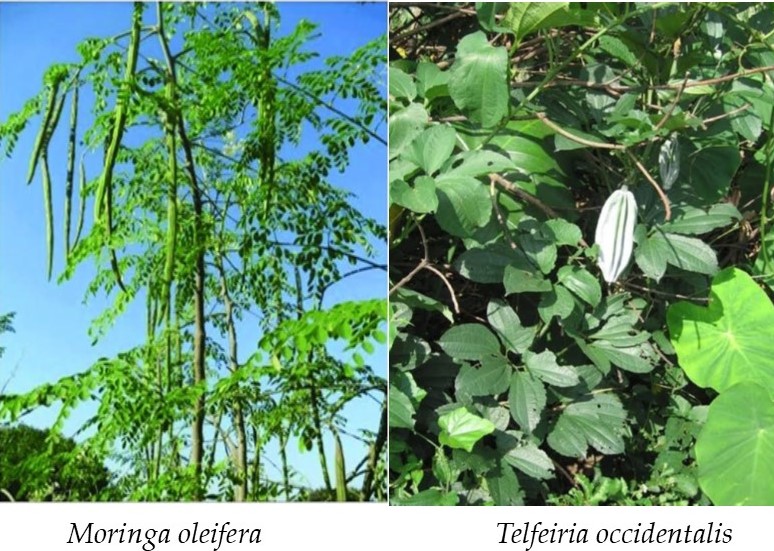
English names for the Moringa oleifera lam include Horseradish tree, Drumstick tree, and Ben oil tree. While the Fulani names Gawara, Konamarada, and Kinimaka are used locally in Nigeria: Haus: Zogall, Zogalla-gandi, Bagaruwar; Ibo: Ikweoyibo; Ewe ile and Eweigbale are Yoruba. The moringa tree is native to the southern foothills of the Himalayas, as well as potentially Africa and the Middle East. It primarily thrives in semi-arid, tropical, and subtropical regions [16]. It is currently widely grown in Africa, Central and South America, Sri Lanka, India, Mexico, Malaysia, and the Philippines, among other places. The tree itself is very slender, with drooping limbs, and reaches a height of around 10 m. The bark is dense, corky, soft, and deeply split. The flowers, which are fragrant and arranged in enormous panicles, are elliptic and the leaves, which are often tripinnate, are pendulous, greenish, triangular, and ribbed with trigonor's winged seeds. The fruit, which may grow up to 30 cm long and 2.5 cm broad and has a triangular cross section, has earned the term "drumstick" in India.
Fast-growing and drought-resistant Moringa oleifera is a member of the Moringaceae family of plants. It is commonly cultivated for the immature seed pods, leaves, and traditional herbal remedies that are utilized as vegetables. A fast-growing deciduous tree with a trunk diameter of 45 cm (1.5 feet), Moringa oleifera can grow to a height of 10 to 12 meters (32 to 40 feet). A thick cork surrounds the whitish gray bark, which is also gray in color. Bark on young shoots is hairy and purplish or grayish white in color. Five uneven, lightly veined, yellowish white petals surround the fragrant, hermaphroditic flowers. The blooms are 1.0-1.5 cm (1/2") long and 2.0 cm (3/4") wide, and they are borne in spreading or drooping flower clusters that are 10–25 cm long and have slender, heavy stalks. Within the first six months after planting, flowering starts. Located in a cool climate. Only once a year, between April and June, does flowering take place. Flowering may take place twice or even all year long in areas with more consistent rainfall (Fig. 2).

Figure 2. Moringa oleifera
Principal Ingredients: Pterygo-spermin, an active anti-biotic component, is found in the lam root of the Moringa oleifera plant. Two alkaloids, moringine, which is the same as benzyl amine, and moringinine, which belongs to the sympathomimetic group of bases, are present in the root bark (total alkaloid content: 0.1%). It also has traces of an offensive-smelling essential oil. resins, waxes, and phytosterol. Roots have been used to isolate an alkaloid known as spirochin [12]. Many Gram-positive and gram negative bacteria are inhibited from growing by pterygospermin (at concentrations of 0.5-3 kg/cc), and fungi are affected by it at greater concentrations (7-10 kg/cc). While it breaks down in the presence of pancreatic juice, it remains stable in the presence of blood and gastric juice. Thiamine and glutamic acid block its effects, whereas pyridoxine strengthens it. The pharmacological activities and toxicity profiles of the various Moringa oleifera lam components have not yet been fully characterized. Only a small number of the various illnesses it has been used to treat over the years and was studied for. One of the top names recently in plant and medicine research is Moringa oleifera. There are now a lot of studies on the nutritional benefits of moringa, both in academic and lay literature. The results of a clinical trial that has been carefully monitored and well-documented, however, are still unquestionably of tremendous importance [17]. They concluded that there was no evidence of acute toxicity in the liver, kidney, heart, or lung histology. According to El-Hack et al. [18], uterine contractions brought on by the tree's bark have the potential to be lethal. Moringa oleifera root methanolic extract was discovered to contain 0.2% alkaloids. Mice's liver and kidney function as well as hematologic parameters have been evaluated in response to several weekly doses of the crude extract (35, 46, and 70mg/kg, respectively) and daily therapeutic dosages (3.5, 4.6, and 7.0 mg/kg, respectively).
2.1.1 Vitamins and minerals constituents in leaves of Moringa oleifera
For thousands of years, people have hailed the plant Moringa oleifera for its therapeutic properties. It contains a lot of beneficial antioxidants and bioactive plant substances. Scientists have only looked at a small portion of the numerous purported health advantages thus far. The huge tree Moringa oleifera is nearly entirely consumed or utilized as a component of traditional herbal medicine. The leaves and pods, which are frequently consumed in regions of Africa and Asia, are prime examples of this. And great source of vitamins and minerals is moringa leaves; 1 gram of chopped leaves (21g) contains (Fig. 3).

Figure 3. Vitamins and minerals constituents in moringa leaves
Compared to the leaves, the pods are generally lower in vitamins and minerals [19]. However, one cup of freshly sliced pods (100g) has 157% of the daily need for vitamin C, making them especially rich in this vitamin. However, there is a drawback: high amounts of antinutrients in moringa leaves may inhibit the body's ability to absorb protein and minerals.
Antioxidants are substances that protect the body from free radicals. Oxidative stress, which is linked to chronic diseases including heart disease and type 2 Diabetes, may be brought on by a high quantity of free radicals. In addition to vitamin C and beta carotene, Moringa oleifera leaves also contain other antioxidants [20]. These consist of: Quercetin may help decrease blood pressure, and coffee also contains significant amounts of chlorogenic acid. After meals, chlorogenic acid might help control blood sugar. Taking 1.5 teaspoons (7g) of Moringa oleifera leaf powder each day for three months considerably raises blood antioxidant levels, according to a study on women. High blood sugar levels can be a severe health issue, but moringa may lower them. It's interesting to note that some research suggests Moringa oleifera may help reduce blood sugar levels. Only a few studies have been done on humans, and those that have been done are often of low quality and are based primarily on animal studies. In one research of women, ingesting 1.5 teaspoons (7g) of moringa powdered leaves daily for three months resulted in an average reduction of 13.5% in fasting blood sugar levels.
Another small study in six people with diabetes found that adding 50g of moringa leaves in a meal reduced the rise in blood sugar by 21% (effect of some Indian vegetables on the glucose and insulin response in diabetic subjects; feliciawillian, s.lakshminarayanan and hariprasadchegu.). Scientists believe these effects are caused by plant compounds such as isothiocyanate.
2.2 Telferia occidentalis
A tropical vine called Telfeiria occidentalis (Fig. 4).is cultivated in West Africa for its tasty seeds and leaves. The cucurbitaceae family includes Telfeiria occidentalis, which is native to Southern Nigeria. Although the fluted gourd is grown in several West African countries, it is primarily grown in Igbo and Calabar countries. The plant is a dioecious perennial that tolerates dryness and is typically cultivated trellised. The fluted gourd fruit is quite enormous, with an average of 9 centimeters in diameter and between 16 and 105 centimeters (6.3 and 41.2 inches) in length. The fruit has a length of between 3.4 and 4.9 cm. both the staminate and pistillate types. In sets of five, the creamy-white and dark red petals of Telfeiria occidentalis flowers contrast with the light green color of the fruits when they are young and the yellow color when they are ripe. Dioecious flowering is most common in fluted gourds, with relatively few reported occurrences of monocious flowering.

Figure 4. Telfeiria occidentalis
2.2.1 Nutritional Content:
The fluted gourd, which is regarded as an oil seed, contains oil. Telfeiria occidentalis seeds have crude protein and lipids, while the shoots have significant quantities of potassium and iron. Telfeiria occidentalis leaves have high levels of antioxidant, hepatoprotective, and antibacterial characteristics (Fig. 5).

Figure 5. Nutrition content of Telfeiria occidentalis plant
2.2.2 Medicinal uses of Telfeiria occidentalis
The fluted pumpkin (Telfeiria occidentalis) has been used medicinally in a number of traditional Chinese medicines. Despite the fact that many of these claims have not yet been proven by science. According to some reports, Telfeiria occidentalis contains antioxidant and antibacterial qualities as well as minerals, including iron, vitamins, particularly vitamins A and C, and a high protein content. As a result, it has been employed in the treatment of a number of illnesses.
Essential oils and vitamins can be found in the leaves, and curcubitacine, sesquiterpene, and lactones can be found in the root [21]. In ethnomedicine, the young leaves are sliced, combined with salt and coconut water, and preserved in a bottle to treat convulsions [22] The roots are employed as an agony poison and a rodenticide [23]. According to Okonwu et al. [24], Telfeiria occidentalis has a particularly rich amino acid profile that includes alanine, aspartate, glycine, and glutamine. According to a study, giving animals a food enriched with Telfeiria occidentalis over an extended period of time led to a considerable rise in animal weight, which may be related to the plant's high nutrient content. Nearly all creatures have antioxidant flaws and repair mechanisms that have evolved to protect them from oxidative damage, though these mechanisms are not adequate to completely avoid it. Antioxidant supplements made from foods that contain antioxidants can be used, though.
Numerous experts, particularly those working in the field of medicine, have noted Telfeiria occidentalis's capacity to neutralize free radicals and its antioxidant properties. Telfeiria occidentalis has dark green, leafy vegetables, and extracts from the leaves have been shown to lower lipid peroxidation status, elevate antioxidant enzymes (like superoxide dismutase and catalase), suppress or prevent the production of free radicals, and scavenge already produced free radical. Telfeiria occidentalis has also been shown to protect against and treat rats' malnutrition-induced oxidative brain and liver damage [25].
2.3. Toxicity of herbal medicine and herbal formulation
Despite their widespread use and generally accepted safety, medicinal herbs can nonetheless be harmful, especially during pregnancy, when plant poisoning has been documented. It has typically been caused by misidentification of the plant in the form in which it is marketed or inappropriate preparation and administration by staff who are not fully qualified, hence it is preferable that medicinal plants be administered by competent and trained personnel. Numerous diverse compounds, some of them very complex, are found in most medicinal plants. Plant components including mucilage, polysaccharides, and tannins modulate and alter the effects of any active element or principle [26] Biological science holds that the whole plant is greater than the sum of its parts, which reflects the inherent conservatism of the medicinal establishment. Studies have shown that the extract effects of whole plants cannot be mimicked by administering, isolating and purifying constituents of the herbs [27].
Pharmaceutical medications are made to elicit particular reactions, and the "risk" of those reactions is typically exchanged for the "benefits" of the principal effects. Medicinal herbs frequently have numerous wide physiological effects occurring simultaneously. These effects are frequently non-specific and infrequently unfavorable, complimentary or synergistic, and directed in the same broad therapeutic goal. The vocabulary of medicine action terminology, such as diuretic, is too limited to effectively characterize the activities of medicinal plants [28].
In actuality, these categories of plants can be distinguished from a safety standpoint. First, there are some herbs that contain harmful elements in concentrations that are nearly pharmaceutical and should not be ingested by untrained individuals. Examples include Digitalis spp., Atropa belladonna, Arnica specie, and Aconitum specie. Secondly, there are herbs with strong effects; these herbs are safe when used properly. Third, there is an oddball collection of herbs that have been said to exhibit a particular type of toxicity. The hepatotoxicity of plants containing pyrrolizidines, such as comfrey, is the most recognized; other examples include dryopeins, viscum, and corynanthe [28].
2.4. Organ toxicity of herbal medicine
2.4.1 Hepatotoxicty
According to the liver Toxicity database, which is maintained by the US National Library of Medicine, over 30 herbal medicines have been found to cause drug-induced liver harm. According to a recent American College of Gastroenterology guideline, herbal products were identified as the second most frequent cause of drug-induced liver injury in the US. However, in clinical practice, it is clear that diagnosing DILI is very challenging because no test or set of criteria exists for an appropriate diagnosis. Studies have shown that herbal medicines may be hepatotoxic, but it is difficult to diagnose and determine whether they are or not because some of the hepatotoxic and other toxicities associated with herbal medicines are caused by contaminants and adulterants present in the herbs, such as look-alike plants and heavy metals [29].
Herbal medications can cause liver issues such as liver damage1, which has a high mortality and morbidity rate. Clinical manifestations can range from asymptomatic cases with abnormal liver function tests to sudden liver failure, necessitating liver transplantation. In some undeveloped nations, like Nigeria, there is little information available on clinical cases of herb-induced liver damage because most incidents are either not reported to healthcare practitioners or hospital reports are not released. Studies in Nigeria have shown a potential link between herbal usage and liver illness, while research from Uganda has shown a link between traditional herbal medicine use and liver fibrosis in both HIV-positive and HIV-uninfected patients [30].
Herbs-induced liver injury (HILI), which only rarely affects a small number of people who are susceptible, is caused by chemicals that can be created either naturally or artificially. Because these chemicals are foreign to the body, they must undergo metabolic breakdown in order to be eliminated. However, during metabolism, chemicals that are toxic to the kidney may be generated, leading to liver damage in those who are sensitive. It's crucial to remember that HILI frequently self-limits. However, it has been suggested that liver transplantation, acute liver failure, and ongoing liver damage be treated. Some plants secrete harmful substances as secondary metabolites, which could be difficult to identify from the substances that actually have pharmacological activity. According to Kumar et al. [31], some of these herbs are made under very unsanitary conditions employing possibly harmful substances, which exposes the user to different forms of hepatotoxicity.
2.4.2 Neurotoxicity
Several neurotoxins have been identified in herbal treatments, and it is possible that more may be found in the future with subtler or more complex effects. The central nervous system and the peripheral nervous system make up the nervous system. Neuron-toxic chemicals typically impact the cerebellum, which is a component of the brain and forms part of the central nervous system [32, 33]. The most serious aspect of this system's toxicity is the loss of activities/function it causes, including impotence, paralysis, and the retention of urine and stools. Common plants used in herbal medicines that may be neurotoxic include Papaver somniferum (opium), Catharanthus roseus (vinca), Datura stramonium (tornapple), Atropa belladona (deadly nightshade), Hyoscyamus nigra (henbane), Cannabis indica (marijuana), Conium maculatum (hemlock), and Coscinium fenestratum (yellowvine).
Recent research has revealed a variety of neurologic and adverse consequences of herbal medicine, such as hallucinations, psychosis, convulsions, and encephalopathy. In addition, several herbs interact with medications used for treating neurological disorders. such as anticoagulants and antiepileptic medications, which make it difficult to manage the patient's illness. Additionally, there is mounting proof that herbal medicine goods include neurotoxic lead, mercury, and arsenic in potentially hazardous concentrations. As a result, it is crucial to systematically validate the efficacy and toxicity of herbal remedies as well as conduct toxic metal level screenings [34, 35].
3. Conclusion and future direction
The idea behind herbal medicine is that, with the right processing and administration, even a potent poison can be transformed into a great medication. On the contrary hand, if used improperly, even the most beneficial medication might turn poisonous. Practitioners of herbal medicine have over the years experimented with a variety of conventional techniques to transform poisonous medicinal herbs into beneficial drugs. Ancient healers likely were not aware of the chemical makeup of the herbs when they created formulations based on them as medicines. In order to cure human illnesses, herbal medicine uses a number of harmful natural substances, either unprocessed or after going through purification procedures. We may draw the conclusion that the conventional method of purification has the potential to affect the phytochemical, pharmacological, and toxicological profile of plant drugs, which is beneficial for improving the safety and efficacy of the medications. It is beneficial to use purification techniques from the Indian medical system while creating herbal formulations in order to evaluate their efficacy and safety. According to studies, the medication becomes harmless when the harmful components are transported into the medium. A drug's ability to function without creating side effects or adverse effects is unquestionably influenced by specific media. Traditional healers continue to play an important role in basic healthcare systems in poor countries. The government and regulatory bodies should ensure that herbal medicinal plants are used correctly.
Authors’ contributions
The authors are equally liable for any plagiarism because they all contributed equally to writing the content.
Acknowledgements
None
Funding
None
Availability of data and materials
All relevant data are within the paper and its supporting information files. Additional data will be made available on request according to the journal policy.
Conflicts of interest
The authors have declared that no competing interests exist.
References
1. Dauqan, E.M.; Abdullah, A. Medicinal and functional values of thyme (Thymus vulgaris L.) herb. J. Applied Biol. Biotechnol., 2017, 5(2), 17-22.2. Sachan, A.K.; Kumar, S.; Kumari, K.; Singh, D. Medicinal uses of spices used in our traditional culture: Worldwide. J. Med. Plant Stud. 2018, 6(3), 116-122.3. Motti, R. Wild plants used as herbs and spices in Italy: An ethnobotanical review. Plants. 2021, 10(3), 563. 4. Noor, F.; Tahir ul Qamar, M.; Ashfaq, U.A.; Albutti, A.; Alwashmi, A.S.; Aljasir, M.A. Network pharmacology approach for medicinal plants: review and assessment. Pharmaceuticals. 2022, 15(5), 572.5. Tadese, D.A.; Song, C.; Sun, C.; Liu, B.; Liu, B.; Zhou, Q.; Xu, P.; Ge, X.; Liu, M.; Xu, X.; Tamiru, M. The role of currently used medicinal plants in aquaculture and their action mechanisms: A review. Rev. Aquaculture 2022, 14(2), 816-847.6. Prasathkumar, M.; Anisha, S.; Dhrisya, C.; Becky, R.; Sadhasivam, S. Therapeutic and pharmacological efficacy of selective Indian medicinal plants–a review. Phytomed. Plus. 2021, 1(2), 100029. 7. Maher, T.; Ahmad Raus, R.; Daddiouaissa, D.; Ahmad, F.; Adzhar, N.S.; Latif, E.S.; Abdulhafiz, F.; Mohammed, A. Medicinal plants with anti-leukemic effects: A review. Molecules. 2021, 26(9), 2741.8. Poddar, S.; Sarkar, T.; Choudhury, S.; Chatterjee, S.; Ghosh, P. Indian traditional medicinal plants: A concise review. Int. J. Botany Stud. 2020, 5(5), 174-190. 9. Tesfahuneygn, G; Gebreegziabher, G. Medicinal plants used in traditional medicine by Ethiopians: A review article. J. Respir. Med. Lung Dis. 2019, 4(1), 1-3.10. Preston, J.D.; O'Neal, J.H.; Talaga, M.C.; Moore, B.A. Handbook of clinical psychopharmacology for therapists. New Harbinger Publications; 2021. 11. Mouly, S.; Lloret-Linares, C.; Sellier, P.O.; Sene, D.; Bergmann, J.F. Is the clinical relevance of drug-food and drug-herb interactions limited to grapefruit juice and Saint-John’s Wort?. Pharmacol. Res. 2017,118, 82-92.12. Paul C. and Didia B. 'The effect of methanolic extract of Moringa oleifera lam roots on the histology of kidney and liver of guinea pigs.' Asian J. Med. Sci. 2012, 4 (1), 55-60. 13. Koul, B.; Chase, N. Moringa oleifera Lam.: Panacea to several maladies J. Chem. Pharm. Res 2015, 7 (6), 687-707.14. Nikkon, F.S.; Hassan, K.A.; Salam, M.A.; Mosaddik, P.; Khondkar, M.E.; Rahman, M. 2009. Benzylcarbamothioethionate from root bark of Moringa oleifera Lam. and its toxicological evaluation. Lat. Am. Caribbean Bull. Arom. Med. Plants. (Boletin Latinoameticano del caribe de plantas medicinales Aromaticas) 2009, 8(2), 130-138. 15. Anand, U.; Jacobo-Herrera, N.; Altemimi, A.; Lakhssassi, N. A comprehensive review on medicinal plants as antimicrobial therapeutics: potential avenues of biocompatible drug discovery. Metabolites. 2019, 9(11), 258.16. Asif, S.; Ahmad, M.; Zafar, M.; Ali, N. Prospects and potential of fatty acid methyl esters of some non-edible seed oils for use as biodiesel in Pakistan. Ren. Sustain. Eng. Rev. 2017, 74, 687-702. 17. Dixit, S.; Tripathi, A.; P. Kumar, P. Medicinal properties of Moringa oleifera: A review Int. J. Edu. Sci. Res. Rev. 2016, 3(2), 173-185.18. El-Hack, A.; Mohamed, E.; Alagawany, M.; Elrys, A.; Desoky, E.; Tolba, H.; Elnahal, A.; Elnesr, S.; Swelum, A. Effect of forage Moringa oleifera L.(moringa) on animal health and nutrition and its beneficial applications in soil, plants and water purification. Agriculture. 2018, 8 (9), 145. 19. Islam, M.A.; Sheikh, A.; Waterman, C.; Hosenuzzaman, M. Morphology, pod yield and nutritional quality of two cultivars of Moringa (Moringa oleifera) in Bangladesh. Indian J. Sci. Technol. 2020, 13(37), 3893-3903.20. Kashyap, P.; Kumar, S.; Riar, C.S.; Jindal, N.; Baniwal, P.; Guiné, R.P.; Correia, P.M.; Mehra, R.; Kumar, H. Recent advances in Drumstick (Moringa oleifera) leaves bioactive compounds: Composition, health benefits, bio-accessibility, and dietary applications. Antioxidants. 2022,11(2), 402. 21. Yingngam, B. Chemistry of Essential Oils. In Flavors and Fragrances in Food Processing: Preparation and Characterization Methods. American Chemical Society. 2022, pp.189-223.22. Oyewole, O.A.; Abalaka, M.E. Antimicrobial activities of Telfairia occidentalis (fluted pumpkins) leaf extract against selected intestinal pathogens. J. Health Sci. 2012, 2(2),1-4. 23. Sam, S.M.; Etim, A.U. Effect of paint industry effluent on the growth performances and biomass production of Telfairia occidentalis Hook (F.). Bayero J. Pure Applied Sci. 2019, 12(1), 176-180.24. Okonwu, K.; Akonye, L.A.; Mensah, S.I. Nutritional composition of Telfairia occidentalis leaf grown in hydroponic and geoponic media. J. Applied Sci. Environ. Management. 2018, 22(2), 259-265. 25. Adejuwon, S.A.; Imosemi, I.O.; Ebokaiwe, P.A.; Omirinde, J.O.; Adenipekun, A.A. Protective role of Telfairia occidentalis in irradiation-induced oxidative stress in rat brain. Int. J. Biol. Chem. Sci. 2014, 8(3), 843-853.26. Mensah, M.L.; Komlaga, G.; Forkuo, A.D.; Firempong, C.; Anning, A.K.; Dickson, R.A. Toxicity and safety implications of herbal medicines used in Africa. Herbal Med. 2019, 63,1992-0849. 27. Morton, J. The Horseradish Tree, Moringa pterygosperma (Moringaceae): A Boon to Arid Lands? Econ. Bot. 1991, 45, 318-333.28. Karimi, A.; Majlesi, M.; Rafieian-Kopaei, M. Herbal versus synthetic drugs; beliefs and facts. J. Nephropharmacol. 2015, 4(1), 27. 29. Keshvari, M.; Nedaeinia, R.; Nedaeinia, M.; Ferns, G.A.; Nia, S.N.; Asgary, S. Assessment of heavy metal contamination in herbal medicinal products consumed in the Iranian market. Environ. Sci. Pollution Res., 2021, 28, 33208-33218.30. Amadi, C.N.; Orisakwe, O.E. Herb-induced liver injuries in developing nations: An update. Toxics. 2018, 6(2), 24. 31. Kumar, C.S.; Balanaurugam, B.; Murugeswaran, S.; Natarajan, P.; Sharavanan, S.P.; Petchimuthu, S.; Murugan, T.S. Hepatoprotective activity of leaves and roots extracts of Moringa oleifera Lam. Int. J. Med. Res., 2010, 1(2), 90-93.32. Williamson, E.M. Herbal neurotoxicity: an introduction to its occurrence and causes. Toxicol. Herbal Prod. 2017, 345-62. 33. Ijomone, O.M.; Ifenatuoha, C.W.; Aluko, O.M.; Ijomone, O.K.; Aschner, M. The aging brain: impact of heavy metal neurotoxicity. Critical Rev. Toxicol. 2020, 50(9), 801-814.34. Spencer, P.S.; Palmer, V.S. Direct and indirect neurotoxic potential of metal/metalloids in plants and fungi used for food, dietary supplements, and herbal medicine. Toxics. 2021, 9(3), 57. 35. Gupta, V.K.; Singh, S.; Agrawal, A.; Siddiqi, N.J.; Sharma, B. Phytochemicals mediated remediation of neurotoxicity induced by heavy metals. Biochem Res. Int. 2015, Article ID 534769.

This work is licensed under the
Creative Commons Attribution
4.0
License (CC BY-NC 4.0).
Abstract
Medicinal plants are plants that have been cultivated and utilised for their nutritional and therapeutic benefits. They have been created and sold in the form of tablets, capsules, powders, teas, fresh and dried components. Although most medicinal plants are thought to be natural and safe, this is not always the case. Moringa Oleifera and Telfeira Occidentalis are two medicinal plants with profound health benefits which have been used over the years due to their rich antioxidant constituents and other useful bioactive plant compounds following investigations with respect to organ toxicity have been found to have mainly positive and harmless impacts on body organs. The use of bioactive compounds to reform medicines in the future is exciting, and prospects for curing multiple diseases are encouraging; however, this should be extended to investigating their safe consumption. This review sheds light on the toxicological effects of Moringa Oleifera and Telfeira Occidentalis on vital organs and systems of the body. The present review addresses the break in literature by presenting the need to investigate the interaction of medicinal plants extracts in the body and their mode of action. To our knowledge, this baseline review aids researchers and herb users in understanding many aspects of herbal medicinal use.
Abstract Keywords
Medicinal plants, Moringa oleifera, Telfeira occidentalis, organ toxicity, antioxidant
This work is licensed under the
Creative Commons Attribution
4.0
License (CC BY-NC 4.0).
Editor-in-Chief


This work is licensed under the
Creative Commons Attribution 4.0
License.(CC BY-NC 4.0).